




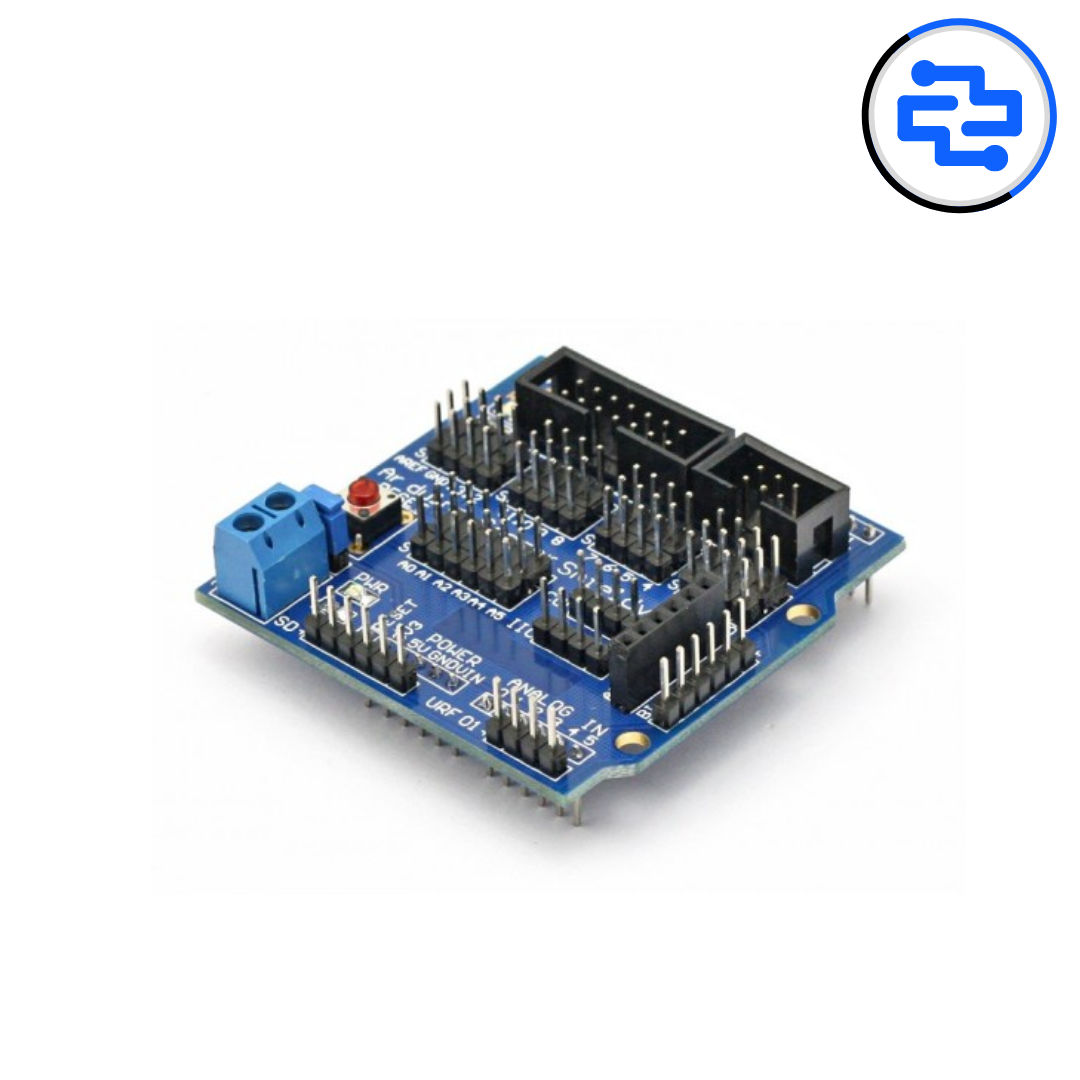


Arduino Sensor Shield V5 Expansion Board
The Arduino Sensor Shield V5 Expansion Board is an expansion module designed to simplify the connection of sensors, servos, motors, and other electronic modules with Arduino development boards. It provides clearly labeled connection ports, dedicated power pins, and easy access to Arduino I/O pins, reducing wiring complexity during project development. This shield is widely used for robotics, automation, IoT, and educational electronics projects. Available at Directronics, the Arduino Sensor Shield V5 Expansion Board is ideal for students, hobbyists, makers, educators, and professional engineers.
Features:
• Compatible with Arduino UNO and Compatible Boards
• Expands Arduino I/O Pin Accessibility
• Dedicated Ports for Sensors and Servo Motors
• Clear Pin Labels for Easy Connection
• Supports 3-Pin Sensor Connections (VCC, GND, Signal)
• Separate Power Supply Terminals
• Onboard Power Indicator LED
• Reset Button Access
• Simplifies Project Wiring
• Compact Shield-Type Design
• Supports Multiple Modules Simultaneously
• Ideal for Robotics and Automation Projects
Why Choose Arduino Sensor Shield V5 Expansion Board?
• Makes Arduino connections easier and cleaner
• Reduces wiring errors during prototyping
• Provides convenient sensor and servo connections
• Saves development time for complex projects
• Suitable for beginners and advanced makers
• Perfect for robotics and educational applications
Applications:
• Arduino Robotics Projects
• Robot Car Development
• Servo Motor Control Systems
• Sensor-Based Automation
• IoT Prototype Development
• Line Following Robots
• Smart Home Projects
• Educational STEM Projects
• Embedded System Prototyping
• DIY Electronics Projects
Technical Specifications:
• Product Type: Arduino Expansion Shield
• Board Version: Sensor Shield V5
• Compatible Boards: Arduino UNO / UNO Compatible Boards
• Interface Type: Shield Expansion
• Sensor Ports: 3-Pin Interfaces (VCC, GND, Signal)
• Servo Ports: Dedicated Servo Connections
• Operating Voltage: 5V DC (Arduino Supply)
• Communication Support: Digital, Analog, I2C, UART, PWM Pins
• PCB Type: Expansion Board
• Indicators: Power LED
• Mounting: Arduino Shield Format
Package Includes:
• 1 × Arduino Sensor Shield V5 Expansion Board
Related Products:
• Arduino Uno
• Arduino Nano Breakout Board
• ESP32 Development Board
• Raspberry Pi Pico W
• Servo Motors
• Ultrasonic Sensor HC-SR04
• Motor Driver Modules
• Jumper Wire Bundle (40Pcs)
• Breadboard
• Sensor Modules
Why Buy from Directronics?
Directronics provides quality development boards, communication modules, sensors, electronic components, robotics modules, power management solutions, and IoT products for students, makers, educational institutions, startups, and industry professionals. Explore our complete range of Arduino, ESP32, ESP8266, Raspberry Pi, power modules, motor drivers, programming tools, and embedded development products to bring your ideas to life.
Note:
Product images are for illustration purposes only. Actual board layout, connector arrangement, and supported features may vary depending on the manufacturing batch. Ensure proper alignment while mounting the shield on Arduino boards to avoid incorrect connections.