




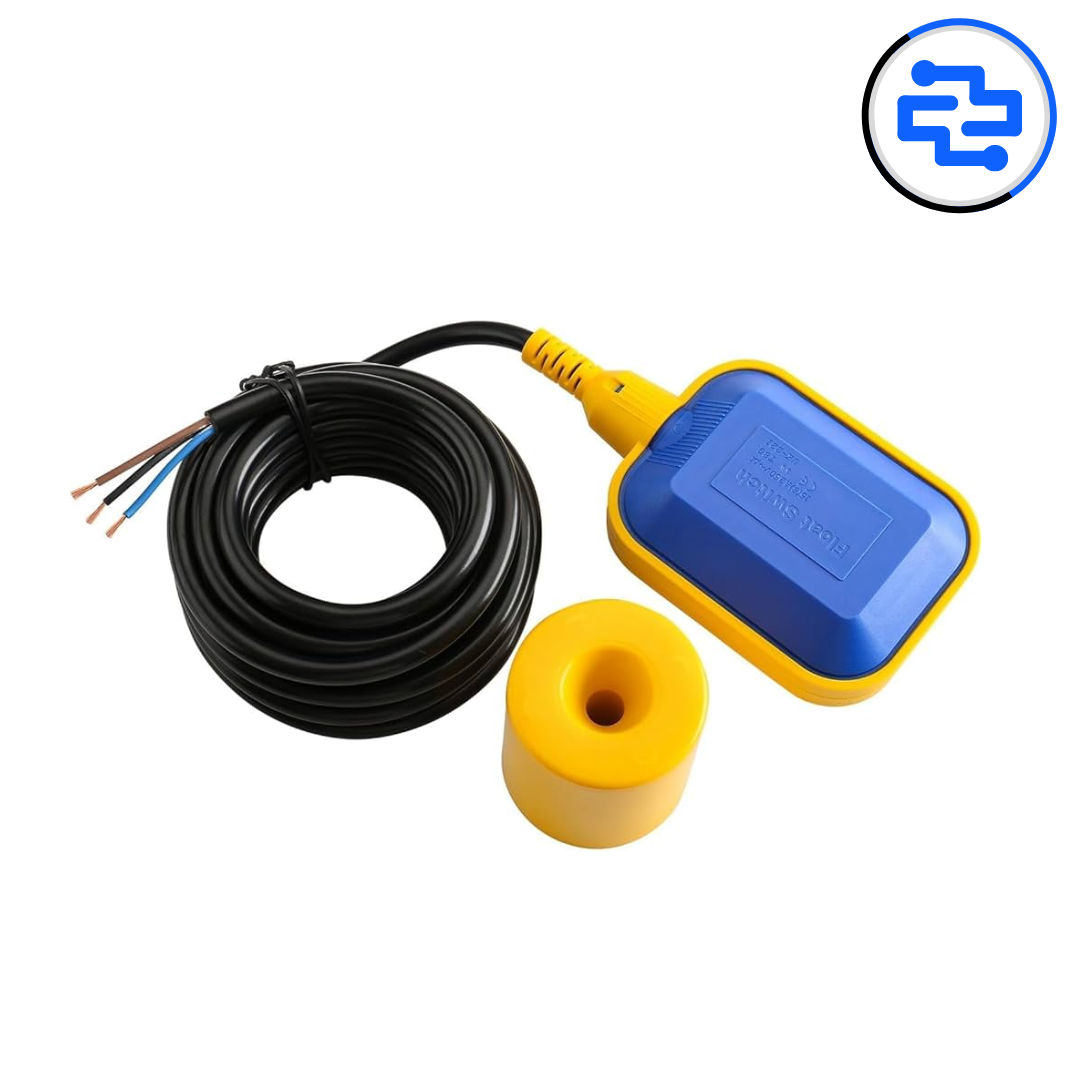


Float Switch Sensor
The Float Switch Sensor is a simple and reliable liquid level detection device designed to detect the presence or absence of water and other compatible liquids. It works using a floating mechanism that moves with the liquid level and activates an internal switch when the preset level is reached. This sensor is widely used for automatic water level control, tank monitoring, pump automation, and industrial liquid management systems. Available at Directronics, the Float Switch Sensor is ideal for students, hobbyists, makers, educators, and professional engineers working on automation and IoT-based monitoring projects.
Features:
• Reliable Liquid Level Detection
• Simple Mechanical Float-Based Operation
• No External Power Required for Switching
• Compact and Easy-to-Install Design
• High Sensitivity and Fast Response
• Durable Plastic Float Construction
• Corrosion-Resistant Design
• Suitable for Water Level Automation
• Easy Interface with Relay Modules and Controllers
• Long Operational Life
• Suitable for DIY and Industrial Applications
Why Choose Float Switch Sensor?
• Provides accurate liquid level monitoring
• Simple operation with minimal maintenance
• Reduces water overflow and dry-run conditions
• Easy integration with Arduino, ESP32, and relay control systems
• Cost-effective solution for automation projects
• Ideal for beginners, students, hobbyists, and professionals
Applications:
• Water Tank Level Control
• Automatic Water Pump Control
• Aquarium Water Level Monitoring
• Rainwater Collection Systems
• Hydroponics Systems
• Industrial Liquid Level Monitoring
• IoT Water Management Projects
• Home Automation Systems
• Laboratory Liquid Detection
• DIY Automation Projects
Technical Specifications:
• Product Type: Float Level Switch Sensor
• Sensor Type: Mechanical Float Switch
• Switching Method: Magnetic Reed Switch
• Operating Voltage: Up to 100V DC/AC (Model Dependent)
• Switching Current: Model Dependent
• Contact Type: NO / NC (Model Dependent)
• Material: Plastic Float + Stainless Steel / Plastic Stem (Model Dependent)
• Cable Length: Model Dependent
• Installation Type: Vertical Mount
• Suitable Liquids: Water and Compatible Non-Corrosive Liquids
• Operating Temperature: Model Dependent
Package Includes:
• 1 × Float Switch Sensor
Related Products:
• 1-Channel Relay Module
• 1-Channel Power Relay Module with Adjustable Timing Cycle
• Arduino Uno
• ESP32 Development Board
• Water Pump Motor
• Jumper Wire Bundle (40Pcs)
• IoT Sensor Modules
• Power Supply Adapter
• Terminal Block Connector
Why Buy from Directronics?
Directronics provides quality development boards, communication modules, sensors, electronic components, robotics modules, power management solutions, and IoT products for students, makers, educational institutions, startups, and industry professionals. Explore our complete range of Arduino, ESP32, ESP8266, Raspberry Pi, power modules, motor drivers, programming tools, and embedded development products to bring your ideas to life.
Note:
Product images are for illustration purposes only. Actual float size, cable length, mounting design, and electrical specifications may vary depending on the manufacturing batch. Verify the voltage and current rating before connecting the sensor directly to a load. For controlling pumps, motors, or high-power devices, use a suitable relay or motor control module.